Hey family,
We need to talk about our African Gods.
There’s a hunger for knowledge about them, a pull toward something many of us didn’t grow up with but still feel deep in our bones. So this post is for you if you’ve ever felt that nudge.
Today, we’re going deep into the world of African deities, specifically the Yoruba Orishas and the Kemetic Neteru. Not as myths, not as characters in a forgotten story, but as living forces that still guide, protect, and empower us.
In Yoruba spirituality, Orishas are divine energies and extensions of Olodumare, the Supreme Creator. They govern different aspects of life and nature: love, war, rivers, metal, thunder, motherhood. There are hundreds, but most people are guided by a few specific ones throughout their lives.
These aren’t just Gods. They’re forces of nature, archetypes, and ancestral guides rolled into one. As Baba Ifa Karade puts it in The Handbook of Yoruba Religious Concepts, the Orishas are divine reflections of the universe and of ourselves.
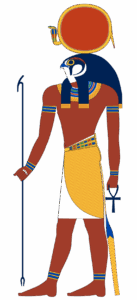
Now, the Neteru (pronounced Net-er-roo) come from Kemet, or ancient Egypt. These are also cosmic principles, not gods in the Western sense. According to Jacob Olupona in African Religions: A Very Short Introduction, the Neteru represent divine laws and energies. Think Ma’at (truth and balance), Ra (life force and creation), Isis/Auset (healing and magic), and Thoth/Djehuty (wisdom and language).
Here’s what’s important: Both traditions emphasize that the divine lives within you. These are energies to align with, not worship in the way we’ve been taught in Abrahamic traditions.
Let’s look at a few and see how they mirror each other:
This isn’t about making them identical, it’s about recognizing universal themes in African spirituality. Healing. Justice. Wisdom. Life force. Boundaries.
Short answer? Because they help you live better.
These energies are not outside of you. They are expressions of your highest self. Calling on them can help you:
Every time you connect with Ogun, you’re calling in strength, focus, and resilience. When you invoke Ma’at, you’re recalibrating to truth and moral clarity. These are are spiritual tools passed down for thousands of years. And whether you remember or not, your DNA does.
Let’s break this down practically:
1. Build an Altar:
Keep it simple. White cloth. A candle. A glass of water. Add elements connected to the energy you’re working with (mirror + honey for Oshun, pen + notebook for Djehuty, red wine or spicy food for Sekhmet).
2. Make Offerings:
Don’t overthink it. Offer oranges, sweet treats, or a spoken prayer. It’s about energy, after all.
3. Speak to Them:
No need to be fancy. “Oshun, I honor you. Bring more love and ease into my life.” Or “Sekhmet, burn away what no longer serves me.”
4. Pay Attention:
Dreams. Numbers. Random feelings. Messages show up in subtle ways. Be open.
5. Be Consistent:
This is a relationship. Show up regularly. Light a candle. Pour libation. Express gratitude.
Let’s be respectful, always.
Whether you feel drawn to Oshun or Isis, Ogun or Sekhmet, it’s not a coincidence. These energies live in your bones. They’re part of your spiritual inheritance. Working with them is about coming home to yourself.
So, take your time. Stay open. And remember: the divine doesn’t live “out there.” It lives in you.
If this resonated with you, drop a comment. Share your experience. Which energy has been showing up for you lately?