When I was Christian, the only symbol that really mattered to me was the cross. It was everywhere: on necklaces, in churches, in songs. But after my cultural awakening, I started to realize something: symbols don’t just represent faith, they carry codes. They shape how we see life, death, spirit, and ourselves. And to be honest, a symbol that focuses mostly on death didn’t feel like the full story.
In African spirituality and its diaspora traditions, symbols are alive. They’re spiritual language. They teach, they activate, they connect us to ancestors and the Creator. They’re not just “decoration.” They are living codes of survival, culture, and memory.
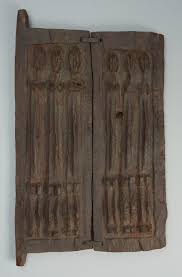
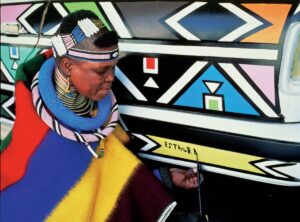
Let’s dive into a few of them — starting with Veve in Vodun, moving to Adinkra in Ghana, and then exploring some you might not even know exist: Nsibidi, the Kongo cosmogram, Dogon symbols, and even Ndebele house paintings.
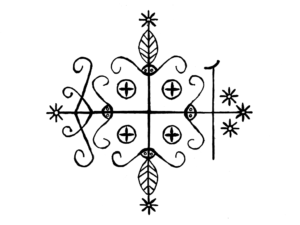
If you’ve ever seen Haitian Vodou ceremonies, you might’ve noticed intricate chalk-like drawings on the ground. Those are Veve.
A Veve is a sacred drawing made with cornmeal, flour, ash, or other powders, used to call in the spirits — known as the Lwa. Each spirit has its own Veve, and when it’s drawn, it’s basically like dialing that spirit’s number.
What’s deeper here is that Veve are traced back to African systems. The Kongo cosmogram (a circle with a cross representing life, death, rebirth) is echoed in Vodou symbols. The Nsibidi script from southeastern Nigeria also used pictographs to carry coded spiritual meaning. Veve, then, are survival -> African language and codes that traveled across the ocean during slavery and re-emerged in new forms.
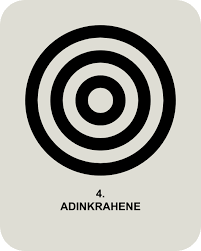
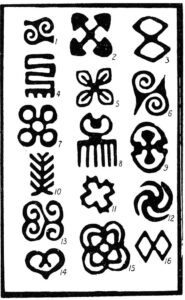
Now, let’s travel to Ghana. The Akan people use Adinkra symbols, and to me, they feel like visual proverbs.
These hold values, philosophy, and spiritual guidance. You’ll see them carved into stools, stamped onto cloth, or worn during weddings, funerals, and rites of passage.
Some powerful examples:
Adinkra symbols are basically spiritual affirmations you can wear on your body or surround yourself with in daily life.
This is where it gets even more interesting. African spiritual traditions are filled with symbol systems that rarely get mainstream attention.
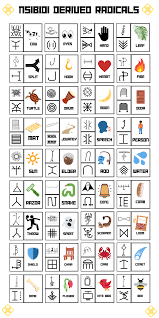
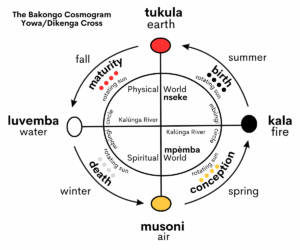
What I love about African and diasporic symbols is that they’re participatory. You don’t just look at them, you activate them. You draw them, chant over them, wear them, or move through them in ritual. They interact with you.
They’re living blueprints for how to connect with spirit, Ancestors, community, and self.
From Veve in Vodou to Adinkra in Ghana to Nsibidi, Kongo cosmograms, Dogon spirals, and Ndebele designs, these symbols carry memory, faith, and power. They survived slavery, colonization, and suppression because they are more than just designs. They are codes, prayers, and pathways to remembering who we are.
So the next time you see one, don’t just see a pattern. See a message. See a connection. See a living piece of African spirituality still breathing today.